

Trendy or Timeless: Why Originality Beats the Algorithm
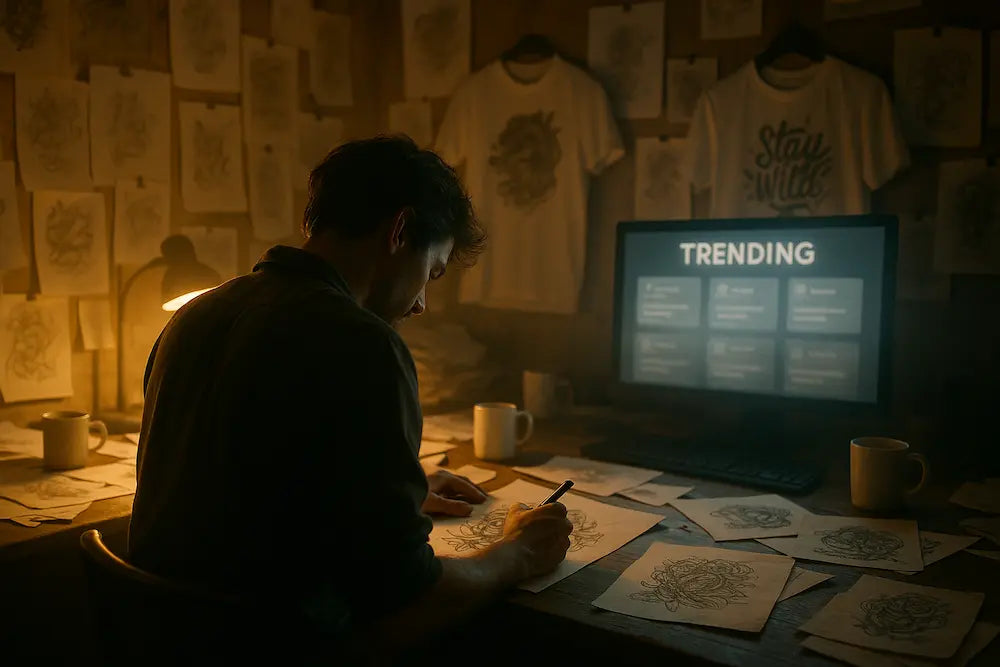
Every season a new “must-have” sweeps through society. A color. A shoe. A diet. A state of mind you can apparently order online. But what if being told what to buy is the same as being told who to be? “Trendy” doesn’t always mean “true.” This is where marketing psychology meets human fragility — and why following the crowd feels safe… until it isn’t.
___________________________________________________________________________

Teka Originals Press Release
Trendy or Timeless: Why Originality Beats the Algorithm: Stephen Matthews
The internet moves faster than breath. One day everyone’s buying Stanley cups, the next day it’s air fryers or mushroom coffee or shirts with fonts that scream “aesthetic.” You can scroll your feed for five minutes and suddenly feel out of date with a world you were perfectly fine in yesterday. Welcome to the age where algorithms dictate appetite, and trends dictate identity. But here’s the question — are we chasing connection, or just chasing approval dressed up as relevance?
The truth is uncomfortable: trends are the modern leash. We think we’re walking the dog, but the dog’s walking us.
There’s this subtle hypnosis happening in every scroll, every like, every little spark of “you might also like.” It’s not accidental — it’s engineered to reward repetition, not originality. Creativity used to be a roar; now it’s a whisper that asks permission to be heard. Every trend begins with a few rebels, but once the herd joins in, the rebellion becomes the rule. The moment something is labeled “hot,” it’s already dying.
And yet — we still run toward it. Because humans have always chased fire.
The difference now is that fire is manufactured in boardrooms by people who’ve never built anything with their hands. That’s where I draw the line.
I’ve spent a lifetime creating things — in kitchens, in workshops, with my hands, with sweat. When you’ve been around creation long enough, you start to notice the difference between what’s made for attention and what’s made with intention. One burns fast; the other lasts forever.
At Teka Originals, we build the second kind — the stuff that doesn’t need to trend because it means something. Funny plaques that poke fun at life’s absurdity. Sarcastic shirts that don’t need your validation to exist. Coffee mugs that call out the nonsense in our daily routines. Real creativity — the kind that doesn’t ask permission — has texture. You can feel it, smell it, hold it. It’s imperfect, and that’s what makes it alive.
But go online, and you’ll find perfection everywhere — crisp, predictable, lifeless perfection.
That’s the psychology of the modern marketplace: sell safety disguised as style. People buy trends because they don’t want to stand alone. They think owning what’s popular gives them belonging. But true belonging never came from buying the same shirt as everyone else — it came from expressing something only you could express.
The irony is that the more we try to fit in, the less we feel like we belong.
So why do we keep doing it?
Because being told what to buy is easier than figuring out who we are.
Procrastination Masterclass Plaque
In the old days — before the algorithm learned our weaknesses — people bought things that represented what they loved. Now, people buy what represents what other people love. Every purchase is a small broadcast: “Look, I’m one of you.”
But here’s the quiet rebellion — the people who resist that noise are the ones who start new worlds. They don’t follow the feed; they feed the movement.
That’s what originality is — not just doing something different, but doing something real. It’s not rebellion for the sake of rebellion; it’s the refusal to let someone else script your identity.
When I see people wearing a Teka Originals shirt that says something sarcastic or real, I know they get it. They’re not buying a product — they’re buying a statement. They’re saying, “I’m awake. I’m not playing this game.”
The Dangerous Psychology of Trends
Marketers know what they’re doing. They study you more than you study yourself. The color palettes that make you stop scrolling, the fonts that feel “trustworthy,” the music that feels “familiar” — it’s all tested, tuned, and deployed with precision.
It’s not evil — it’s just business. But when business starts replacing belief, we’re in trouble.
Trends thrive on FOMO — the fear of missing out. It’s the most powerful motivator in the modern world because it’s rooted in one of our oldest human fears: exclusion. We’re tribal creatures. We want to belong. The algorithm knows that. It whispers: “Don’t miss out. Everyone’s doing it.”
And suddenly, a thousand people who didn’t even want a certain product yesterday are lining up for it today — not because they need it, but because they don’t want to be left behind.
That’s not commerce. That’s manipulation dressed in convenience.

I’ve watched creators burn out chasing the next viral thing. I’ve seen artists abandon their own voices to mimic the current trend just to stay visible. And for what? To be forgotten two weeks later when the next shiny thing rolls out.
The saddest part? Many don’t even realize they’ve lost their identity until it’s gone.
That’s why I believe originality isn’t just an aesthetic choice — it’s a survival instinct.
You either build your own foundation or spend your life living in someone else’s house.
The Paradox of Progress
We love to talk about innovation, but trends often kill it. They flatten creativity into sameness. Look at design, music, even food — everything starts to look and taste the same because creators are afraid to deviate from what performs well.
“Don’t take risks,” they say. “Follow what’s working.”
But what’s working is usually just what’s trending. And what’s trending is just what’s safe.
We end up with a culture that’s allergic to risk — and without risk, nothing original survives.
That’s why I started creating products that punch back at that system. The “Procrastination Masterclass” plaque wasn’t built to trend; it was built to last — to mock our obsession with productivity while celebrating our humanity. The “World’s Greatest Farter” shirt wasn’t designed to go viral; it was designed to make someone laugh at breakfast. These things don’t need a trend to validate them — they create moments. That’s the real gold.
Caffeine, Chaos & Sarcasm – Funny Coffee Mugs
The Algorithm Doesn’t Care About You
Let’s be honest — the algorithm doesn’t love you. It doesn’t even know you. It knows your impulses, not your intentions. It doesn’t care if you’re inspired, only if you’re engaged. It will feed you until you forget what hunger feels like.
And then it sells you more of the same.
The problem isn’t that algorithms exist — it’s that we’ve mistaken them for mirrors. We think they reflect who we are, but they only reflect what we’ve been taught to click.
That’s why I believe creators — the real ones — have a responsibility to resist. To remind the world that creativity came before curation. That art existed before analytics.
You can’t automate authenticity.
A Quiet Return to Originality
We’re starting to see it — a shift back toward handmade, meaningful, imperfect work. People are craving connection, not consumption. They want story, not spectacle.
It’s why small brands with real human voices are winning hearts again. Why sarcasm feels more truthful than slogans. Why something that makes you laugh feels more trustworthy than something that promises “life-changing results.”
When someone holds a mug that says “Caffeine, Chaos & Sarcasm,” they’re not buying a product — they’re buying permission to be real again.
And that’s the secret: originality isn’t dying. It’s just quieter. It doesn’t scream for attention; it earns it.
What Happens When You Stop Chasing
When you stop chasing trends, something beautiful happens: you start hearing your own thoughts again. You create things because they matter to you, not because they might perform well.
You find your voice — and suddenly, people who were tired of the noise start listening.
That’s how real brands are built. Not through imitation, but through integrity. Not by following trends, but by creating truth.
And truth, my friends, doesn’t expire.
World’s Greatest Farter Shirt
Final Thought
Being told what to buy is a symptom of being told how to live. Every time we surrender choice, we surrender a piece of identity.
So the next time a trend tells you who to be — stop.
Ask yourself: Is this me, or is this marketing?
Because in a world full of noise, the most rebellious thing you can do is think for yourself.
That’s the real gold standard.
💬 FAQ
Q: How can a small creator compete with trending brands?
A: By being more human. People are starving for authenticity — and the moment they feel it, they stay.
Q: Isn’t following trends necessary for visibility?
A: Visibility built on imitation disappears when the trend fades. Visibility built on truth compounds.
Q: What’s one rule Teka Originals lives by?
A: Make things worth keeping — even after the trend dies.